OPGx-BEST1
PreclinicalIND-EnablingPhase 1/2Phase 3Approval
Phase 1/2
OPGx-BEST1 is being developed for bestrophin-1 (BEST1)-related inherited retinal diseases or bestrophinopathies, a form of macular degeneration found primarily in adults.
- OPGx-BEST1 is a gene therapy in clinical development for BEST1-related inherited retinal diseases, including Best vitelliform macular dystrophy (BVMD) and autosomal recessive bestrophinopathy (ARB). These forms of inherited macular degeneration primarily affect adolescents and adults and are estimated to impact approximately 8,400 people in the U.S.
- Bestrophinopathy is characterized by retinal lesions, with symptoms including dimness of vision, metamorphopsia (distorted vision) or scotoma (blind spot). OPGx-BEST1 leverages an adeno-associated virus (AAV) vector to deliver a functional copy of the BEST1 gene to the retina so that bestrophin-1 protein is produced in retinal pigment epithelial (RPE) cells. This gene therapy approach aims to restore normal function of the RPE cells such that they can provide proper support to photoreceptors, the cells that detect light.
- OPGx-BEST1 is administered as a one-time subretinal injection and uses an adeno-associated virus (AAV) vector to deliver functional copies of the BEST1 gene to RPE cells, augmenting the mutated gene and restoring RPE support of photoreceptors. Gene therapies such as OPGx-BEST1 are expected to provide long-lasting benefit, potentially for the lifetime of the patient.
For more information, visit clinicaltrials.gov (NCT07185256).
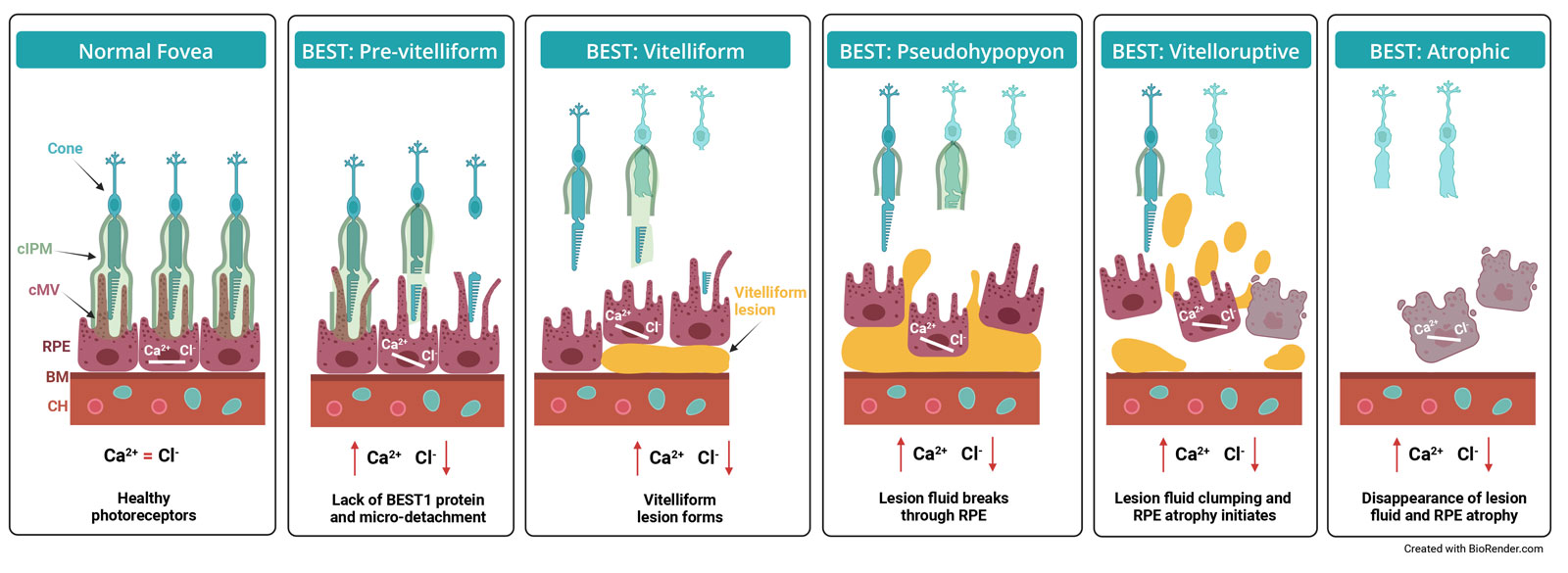
BEST1-related disease is caused by mutations in the BEST1 gene, which encodes bestrophin-1, a calcium-activated chloride channel expressed in retinal pigment epithelial (RPE) cells. Disruption of BEST1 function leads to impaired ionic homeostasis, accumulation of vitelliform (“egg-yolk-like”) material, micro-detachments between the RPE and photoreceptors, progressive RPE atrophy, and eventual central vision loss.