OPGx-LCA5
PreclinicalIND-EnablingPhase 1/2Phase 3Approval
Phase 3
OPGx-LCA5 is being developed for Leber Congenital Amaurosis Type 5 (LCA5) inherited retinal diseases found in adults and children.
- OPGx-LCA5 is a gene therapy in clinical development for Leber congenital amaurosis type 5 (LCA5), a severe, ultra-rare inherited retinal disease affecting approximately 170 people in the U.S. LCA5 is caused by mutations in the LCA5 gene, which encodes lebercilin, a ciliary protein essential for protein trafficking between photoreceptor inner and outer segments. Loss of lebercilin disrupts outer segment development, leading to profound vision loss early in life.
- OPGx-LCA5 is designed as a one-time subretinal gene therapy that delivers a functional copy of LCA5 to photoreceptors. Structural–functional dissociation observed in LCA5 patients, where retinal structure may persist despite severe functional loss, suggests a meaningful therapeutic window for intervention.
- OPGx-LCA5 has the potential to become the first approved gene therapy and one-time treatment for LCA5. The program has received a multi-million dollar grant from the FDA Office of Orphan Drug Products as well multiple regulatory designations: Rare Pediatric Disease, Orphan Drug, and Regenerative Medicine Advanced Therapy (RMAT), and Rare Disease Evidence Principles (RDEP).
For more information, visit clinicaltrials.gov (NCT05616793).
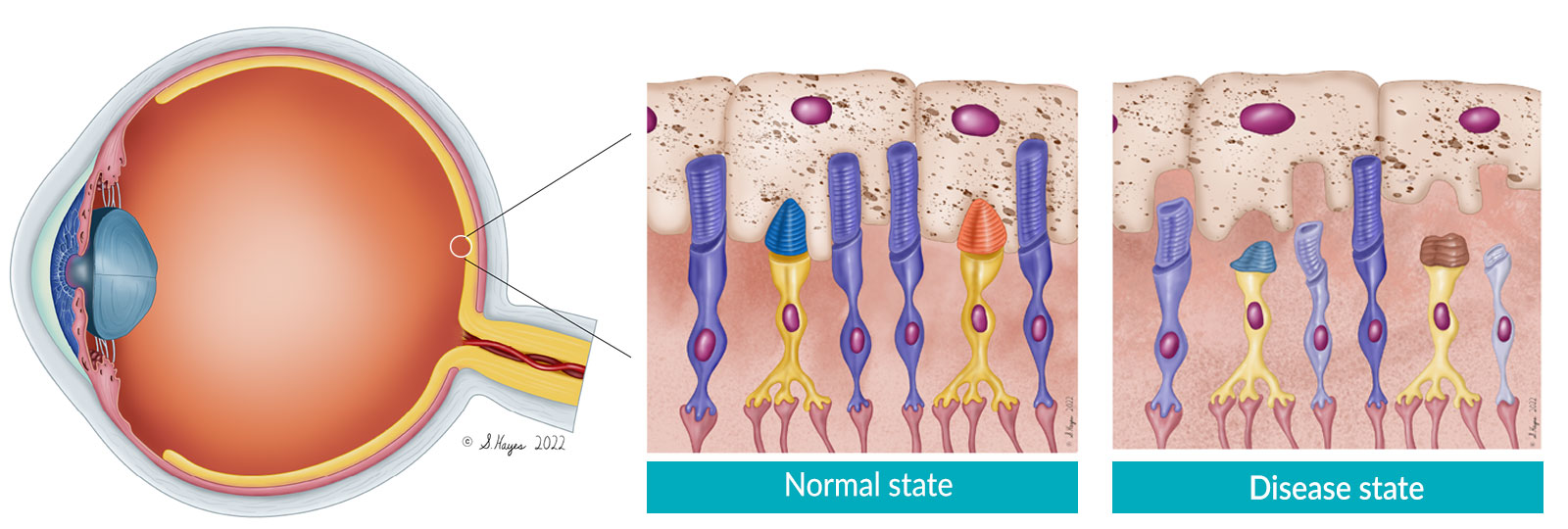
LCA5 is a severe, early-onset form of IRDs. The LCA5 gene encodes for the protein lebercilin, a ciliary protein which is critical for bidirectional protein trafficking in photoreceptor inner and outer segments. Photoreceptors are retinal cells that enable vision by absorbing light and transducing it into an electrochemical signal that is communicated to the visual centers of the brain. In LCA5, the outer segments do not properly develop and photoreceptor function is severely impaired.